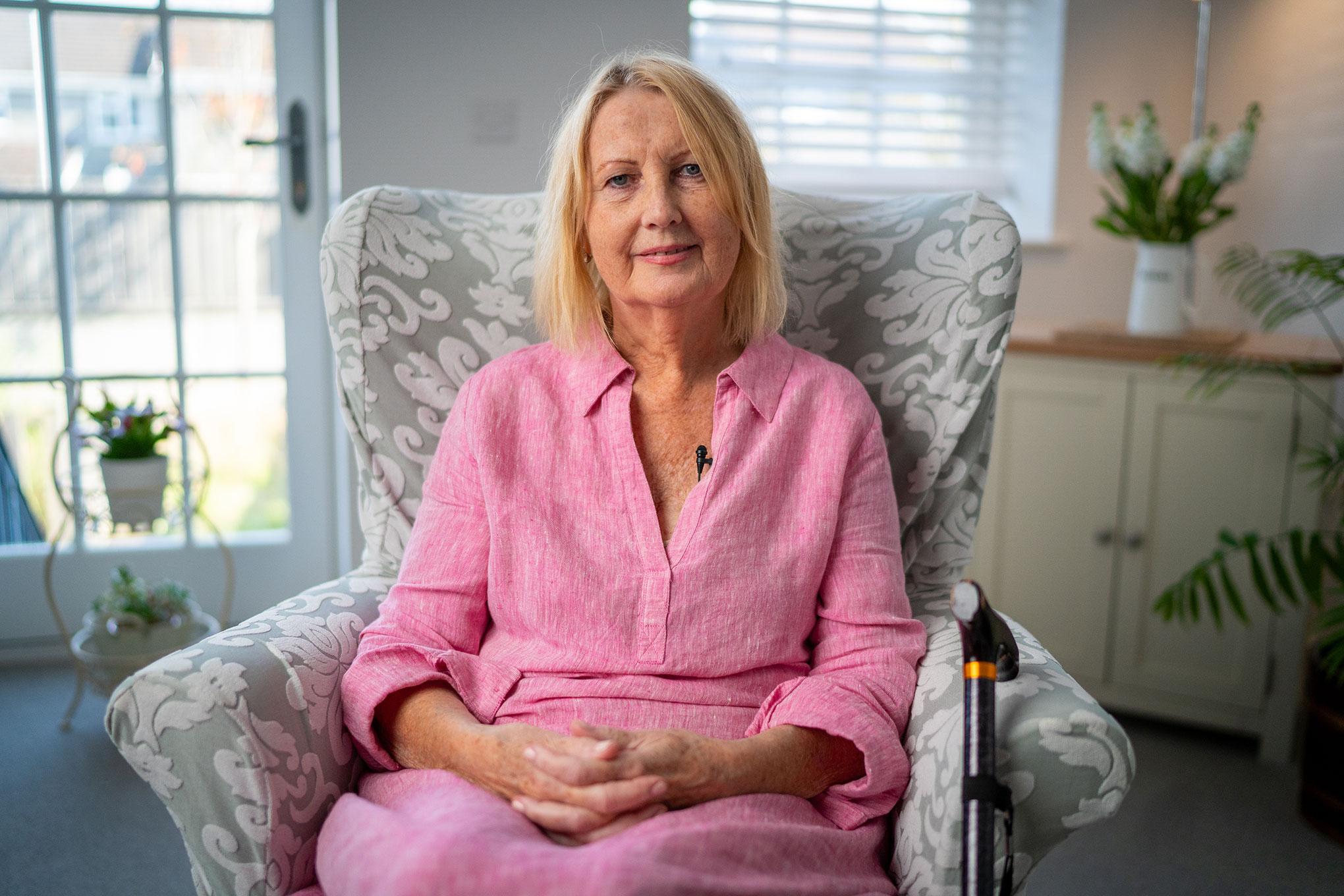
Getting back to everyday activities
Tips for continuing the activities you enjoy after broken bones.

If you have broken a bone, it is normal to feel unsure or worried about returning to your usual activities and hobbies. On this page, we share some practical tips to help you safely return to your everyday life after a broken bone.
How broken bones can affect you
Most broken bones (fractures) heal within six to eight weeks. However, multiple spinal fractures (vertebral fractures) may cause longer-term problems. For example, you may lose height and your back may become more curved, which can make standing and moving more difficult.
A hip fracture often happens after a fall and usually requires surgery. Many people recover well, but this depends on their level of fitness and activity before the injury. For some people, a hip fracture can have a big impact on their ability to carry out daily activities.
Leisure time
Can I still do the things I enjoy?
After a broken bone, it’s normal to worry about doing the activities you used to enjoy. You may be scared of falling or breaking another bone. Some activities may also be harder than before. But the good news is there are many ways to make many everyday activities easier and safer after broken bones.
Can I continue to garden with spinal fractures?
Many people with osteoporosis enjoy gardening. But if you have had a fracture in your spine, you may be unsure if it is still safe for you.
With a little planning and the right equipment, you can still enjoy your garden. Gardening can also help you relax, take your mind off pain, and improve your wellbeing.
Choose tasks that feel comfortable and avoid jobs that cause pain. You may also want to ask family or friends for help, or hire a gardener if you can.
These 10 gardening tips may help:
Make your garden easier to look after, replace lawns with paving or wildflower areas, and choose low-maintenance plants.
Keep paths clear and safe to help prevent trips and falls.
Use raised or narrow flower beds so you do not have to bend or stretch too much.
Do a little gardening often, rather than too much at once. Set yourself small goals and enjoy what you have achieved.
Take regular breaks every 10 to 15 minutes and stretch between jobs. Try not to do the same movement over and over again.
Look for adapted tools for people with reduced mobility at your gardening centre or online. Tools with interchangeable heads and extended handles can be helpful.
Use a padded kneeling stool to help you kneel and stand up safely. You can also keep a stool in a greenhouse or potting shed if you need to sit down.
Always lift safely by bending your knees and keeping your back straight. Use a wheelbarrow or trolley for heavy items.
Make watering easier by using a hose instead of carrying a heavy watering can.
Avoid climbing ladders and use handrails and ramps to stay safe.
Some local councils also run garden-sharing schemes. These allow someone else to help look after your garden. If you use one of these schemes, make sure the person has been approved by the council. Ask your local council what is available in your area
Moving around
Walking safely with a curved back
If your back is curved, it can be harder to see where you are going. This may make you feel less steady when walking.
These tips may help:
Using a walking stick or walking frame can help you feel more balanced. Make sure it is the right height for you.
Be careful in crowded places where people might bump into you.
Try to avoid going out in bad weather, especially when it is icy or snowy. If you do have to go out, see if someone else can go with you.
You may qualify for a Blue Badge, which can help you park closer to places you need to go. Ask your local council for more information.
Use a supermarket trolley instead of carrying a basket. Some shops now have trolleys specifically designed for disabled shoppers.
Ask for help with packing or carrying shopping if you need it.
Use a shopping trolley on wheels that can be pushed or pulled along instead of carrying your shopping in bags.
Ask your GP surgery about a mobility assessment. This is usually done by a physiotherapist who can advise you about walking aids and other support that can help you stay active and independent.
How can I drive my car safely and comfortably?
For many people, driving is an important part of daily life, and getting back to it after a broken bone is an important goal. However, sitting still for a long time in a car, along with bumps and vibrations from the road, can sometimes be uncomfortable. If you are unsure about your ability to drive safely, speak to your doctor or DVLA for advice.
Although some factors cannot be changed, like road conditions, there are ways to make driving safer and easier.
These tips may help:
If you have not driven for some time, it can help to do a short practice drive on a quiet road. Take someone with you in case you feel unsure or need help.
Be careful if you are taking pain medicine. Some medicines can make you sleepy or slow your reactions. If this happens, you should not drive. If you are taking an opioid pain medicine, you should tell the DVLA.
Plan your journey so you have enough time and can stop for breaks, stretch and move around. Try to avoid busy traffic and bad weather when you can.
Make sure your seat is set up correctly. Adjust it so your hips and legs are comfortable and you can reach the pedals easily. You may find a wedge cushion or back support helpful. A fleece or sheep skin seat cover can add softness and reduce pressure points.
To protect you from whiplash, your headrest should sit just behind your head and align with the top of your ears. If you have a curved spine, your headrest may need a bigger cushion.
Try not to twist your body to reach things in the car, especially in the back seat.
Try not to hunch over the wheel or hold the steering wheel too tightly. This will cause tension in your neck and shoulders. Adjust the backrest so that your arms are soft and comfortable on the steering wheel.
Simple changes can help with comfort. Heat pads or heated seats may ease pain. Also, remove items from your back pockets so you can sit evenly.
If getting in and out of the car is difficult, specialist aids may help. For example, the Ross ‘Auto Slide’ cushion allows easier sideways movement in the seat. A ‘Handybar’ is a portable grab handle that fits into the door latch to provide support when entering and exiting the vehicle.
Specialist mobility centres can carry out driving assessments and provide advice about making adaptations to your car.
If you are thinking about getting a new car, there are some features that can make driving easier and more comfortable. There is no perfect car for everyone, but these ideas may help:
Automatic cars are often easier to drive because you do not need to change gears.
Most modern cars have power steering, which makes turning the wheel lighter and easier.
Two or three door cars usually have larger, wider door openings which are easier to get into and out of.
Try to avoid cars with thick window frames, as they can create blind spots and make it harder to see when turning or changing lanes.
Make sure the controls like heating, lights and indicators are easy to reach.
Parking sensors and reversing aids can make parking much simpler and safer. These can also be added to cars you already have.
It is best to avoid very sporty cars, as they often have harder suspensions and can make journeys feel bumpier and less comfortable.
The Research Institute for Disabled Consumers have a useful section on their website to help you choose models of car that may be suitable for you depending on the features you want.
You may qualify for the government’s Motability Scheme to help lease a new car. Find out who may be eligible on the Motability Scheme website.
Although it can be a very hard decision, there may come a time when it is safer to stop driving. This is important for your safety, and for the safety of your passengers and other road users.
Your doctor can give advice about this. Your family and friends can also help support you with the decision.
Using public transport
If you need help using public transport, it is a good idea to plan ahead. This can make travelling easier, safer and less stressful.
Many transport companies can provide support if you contact them before your journey.
Buses and trains
Contact the transport company at least 24 hours before you travel if you need help getting on or off so they can arrange support. An easy access bus may be available with enough notice.
Ask about facilities such as disabled access toilets, disabled parking, stairs and lifts or accessible platforms.
For trains, contact National Rail Enquiries for information on all journeys.
Air travel
Contact the airline at least 48 hours before you travel if you need assistance in the airport and on the plane.
You can also arrange for the airline to help you with storing medicine that needs to be kept in the fridge. Again it is important that you book this well in advance, at least 48 hours before, and then confirm again as you arrive to check in.
Taxis
Ask for an accessible vehicle when you book if you need one.
Let the taxi company know about any mobility needs.
Black cabs usually have plenty of room to get in and out, and they are usually built with wheelchair access in mind.
Ask the driver for help if you need it.
General travel tips
Allow extra time for your journey so you do not have to rush.
If possible, travel with a family member or friend if you are worried about traveling alone.
Take any walking aids or medicines you may need with you.
More support for you
Blue Badge Scheme
A national scheme that provides parking concessions for people with disabilities or mobility issues.
Driver & Vehicle Licensing Agency (DVLA)
For medical enquiries and information on whether health conditions affect your ability to drive safely.
Tel: 0300 790 6806
Driving Mobility
Provides assessments, advice and training for people who need help continuing to drive or use mobility equipment safely.
Tel: 0800 559 3636
Gardening with Disabilities Trust
Offers support, advice and grants to help people with disabilities continue gardening.
www.gardeningwithdisabilitiestrust.org.uk
Carry on Gardening
Provides practical advice, tools and products to make gardening easier for people with physical limitations.
Living Made Easy
An online guide to daily living equipment and adaptations that help with independence at home and outdoors.
Motability Scheme
Helps eligible people lease a car, scooter or powered wheelchair using mobility allowances.
National Rail Enquiries
Provides train timetables, journey planning and information on assisted travel services across the UK rail network.
NHS (Social care and support guide)
Offers trusted information on health, recovery, mobility issues and accessing care and support services.
www.nhs.uk/conditions/social-care-and-support-guide/
Research Institute for Disabled Consumers (RiDC)
Provides independent reviews and information on products and services to support disabled and older people.
Translink (Northern Ireland)
Provides public transport services and journey planning across Northern Ireland, including accessible travel options.
www.translink.co.uk/journey-planner
Traveline
Offers UK-wide public transport information including bus, coach and train timetables and accessible journey planning.
Tel: 0871 200 2233
Thrive
Thrive is a national charity that helps people with a disability to start or continue gardening.
Tel: 0118 988 5688
About this information
This information is being reviewed and updated. It remains available while we complete this work.

Get news and updates via your inbox
Don't miss our expert insights, recipes, and tips for living well with osteoporosis.

Connect with people living with osteoporosis
Our online community is a welcoming and safe space for you to share your experiences and find peer support.