
How your bones work
Bones constantly change throughout our lives. Learn how bones remodel themselves and stay strong.

Bones have many jobs in the body. They protect your organs, store minerals and make blood cells. They also give your body structure. This enables you to move around and do the activities you enjoy.
On this page, we explain how your bones work and how this changes when you have osteoporosis.
What happens inside your bones?
Bones change throughout your life.
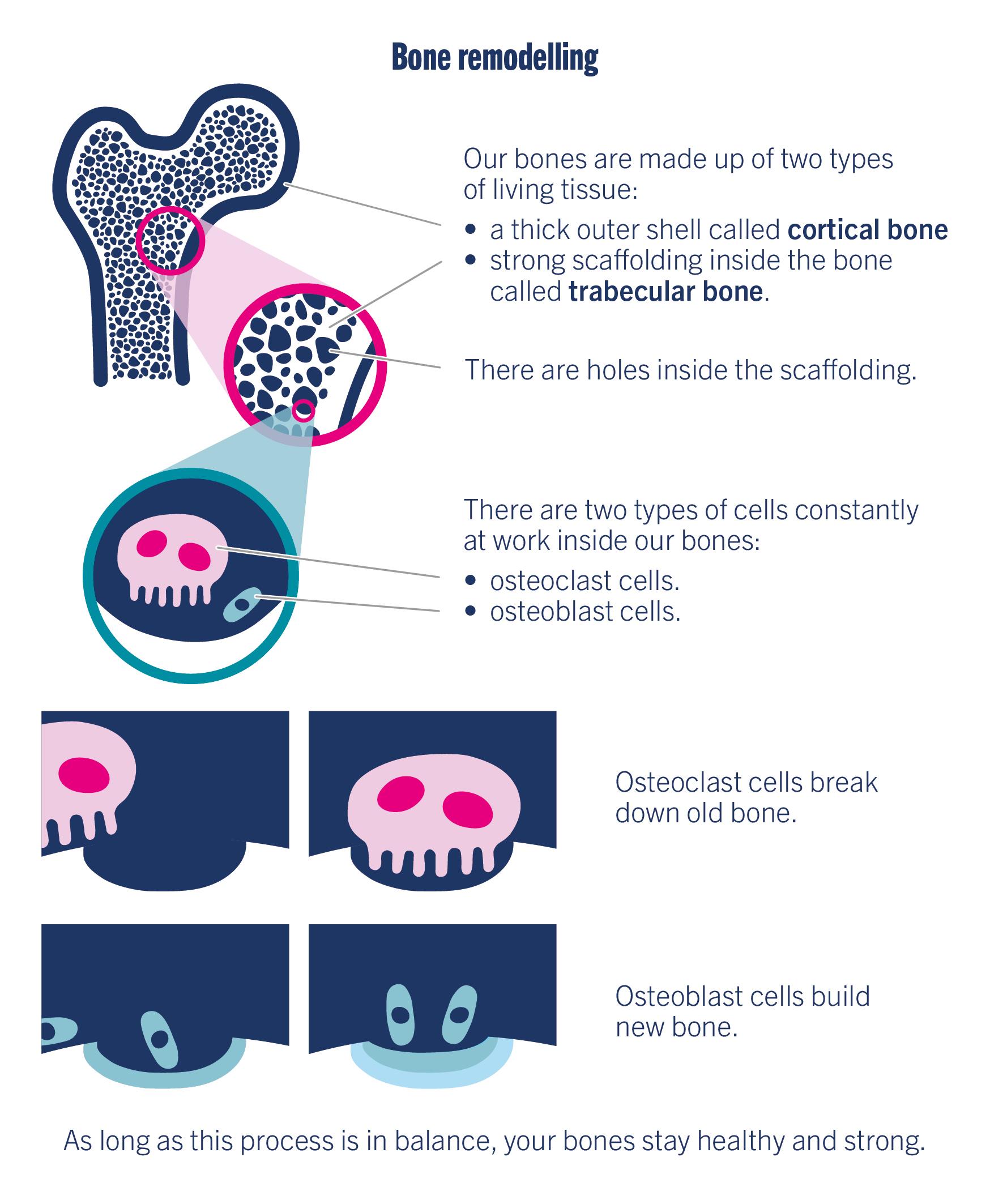
Our bones are made up of:
a thick outer shell called cortical bone
strong scaffolding inside the bone called trabecular bone.
There are holes inside the scaffolding (trabecular bone).
There are also two types of cells inside your bones that work to keep them strong.
osteoclast cells break down old bone
osteoblast cells build new bone.
This process is called bone remodelling. As long as this process is in balance, your bones stay healthy and strong.
The diagram below shows the bone remodelling process.
What happens inside bones with osteoporosis?
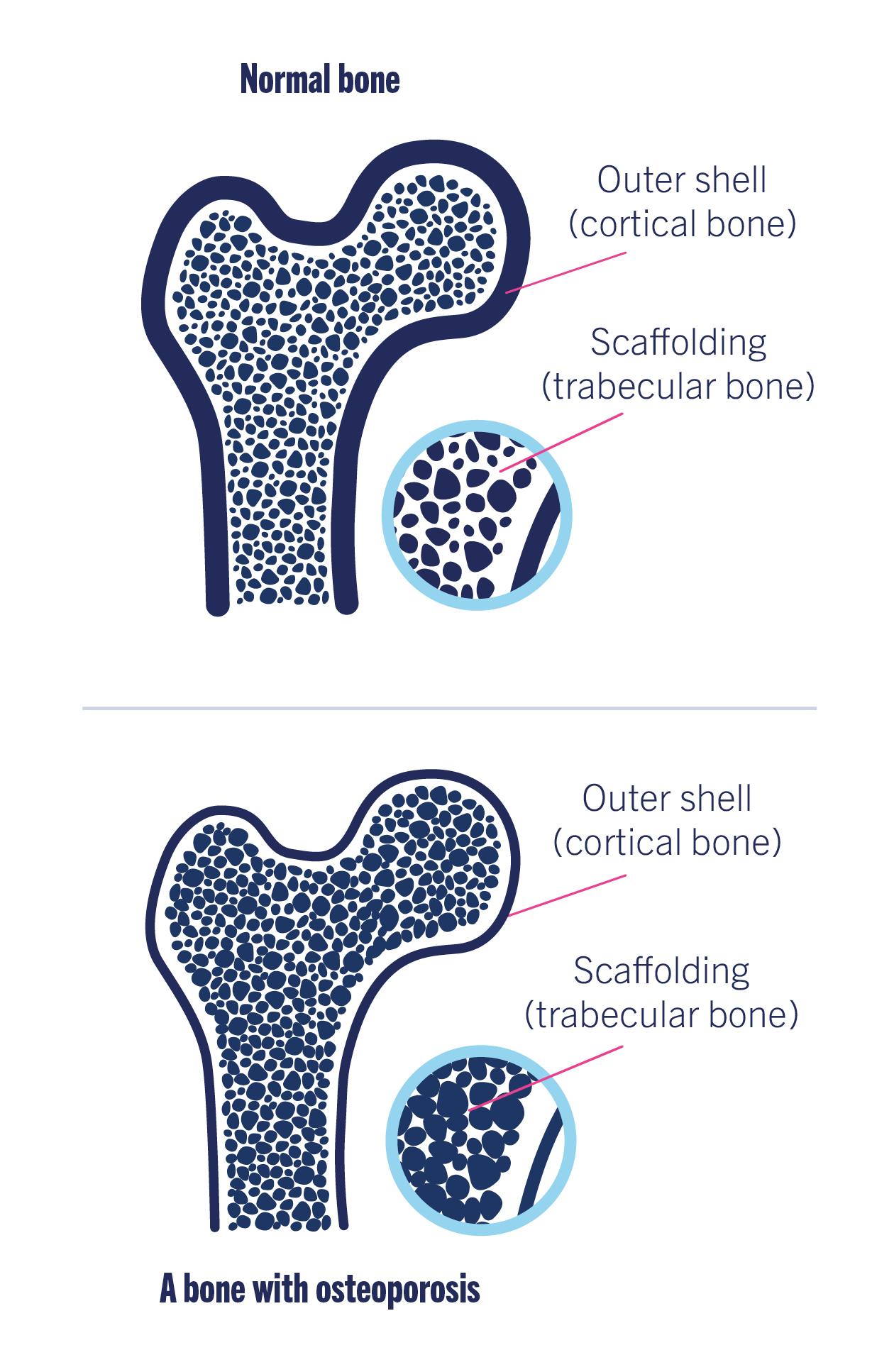
When the bone remodelling process becomes out of balance, it causes changes to the bone. The shell of the bone gets thinner. The scaffolding inside the bone also thins and sometimes breaks down. This is osteoporosis.
Osteoporosis is a condition where your bones lose strength, making you more likely to break a bone (fracture).
The thinning happens on the inside of the bones. This means your bones won’t look any different. You also won’t feel any different.
The diagram below compares what happens to the outer shell (cortical bone) and scaffolding (trabecular bone) inside a normal bone and a bone with osteoporosis.
About this information

Get news and updates via your inbox
Don't miss our expert insights, recipes, and tips for living well with osteoporosis.

Connect with people living with osteoporosis
Our online community is a welcoming and safe space for you to share your experiences and find peer support.