
The problem
Currently in the UK, there is no systematic national approach to identifying people at risk of osteoporosis and fractures. Instead, decisions are made by individual clinicians on a case-by-case basis. This is leaving thousands without the care they need and resulting in failure to prevent life-changing pain and disability. The ROS’s inquiry into primary care fracture prevention, via the UK All Party Parliamentary Group (APPG) on Osteoporosis and Bone Health, found that 61% of people with one of the three major risk factors for a bone health assessment had not had their fracture risk and bone mineral density assessed.
Millions living with undiagnosed spinal fractures. Far too many people suffer multiple broken bones before they are eventually diagnosed with osteoporosis. ROS insight suggests up to 2.2 million people might be living with undiagnosed spinal fractures, which make them three times more likely to suffer a hip fracture. Hip fractures are heart-attack level events, as more than one in four people who break a hip, die within a year. Of those that survive, 60% need help with eating, dressing and personal hygiene twelve months after the fracture.
The solution
Systematic identification of individuals at high risk of fracture including those with undiagnosed spinal fracture, with subsequent assessment and treatment, would lead to a step change reduction in the burden of fragility fractures for individuals, the NHS and society.
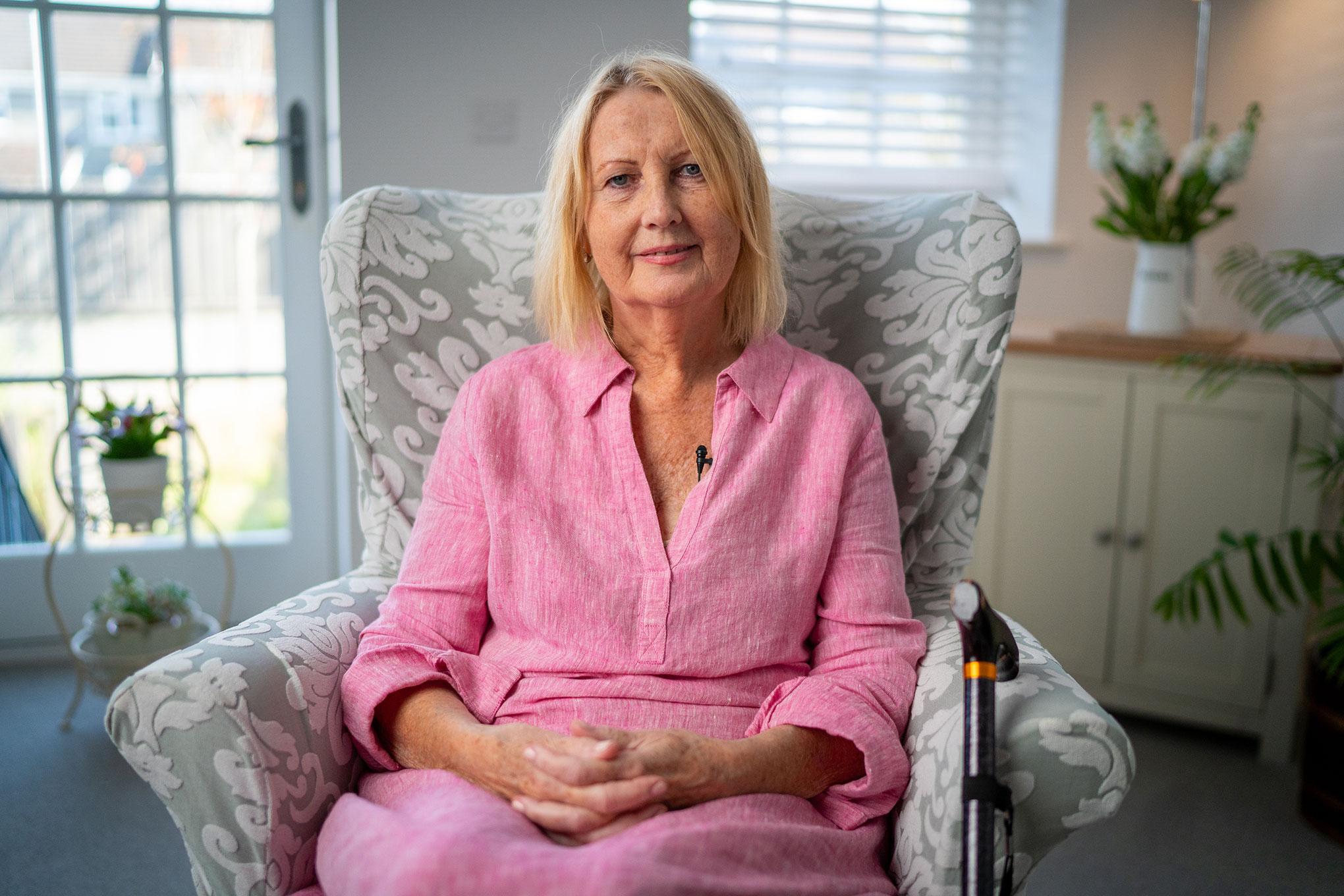
I really do believe that if the fracture I suffered in my spine had been spotted earlier than it was, I would have been spared a great deal of pain and suffering. Believe me when I say, living with these fractures is a nightmare that never goes away.
Active projects

Principal Investigator: Professor Li Wei, University College London
Timescales: March 2026 – March 2027
Amount: £99,803
Summary: What is the problem being investigated? Osteoporosis is a condition that makes bones weak and more likely to break. Breaking a bone can be serious, causing long-term problems or even death. There are screening tests that can be done to see who has weak bones. For example, a special type of scan called a DXA scan can be used. We know that these scans help prevent hip fractures in women and are worth the cost, despite being expensive. We don’t know how well these scans work for men, for different ethnic groups and for those in more deprived areas. DXA scans are not done routinely for patients in the UK. We need to learn more about how DXA scans can help more people to avoid broken bones. What are we planning to do? Our study will use UK healthcare records to learn more about screening for weak bones. We will find people who have had DXA scans and who might have weak bones. We will then check whether receiving DXA scans can help prevent broken bones, and if the scan works differently for different people. The results will help create better screening programmes to reduce the risk of broken bones.
Recently completed projects

Principal Investigator: Professor Eugene McCloskey, University of Sheffield
Timescales: March 2022 – June 2025
Amount: £92,178
Summary: Good news – we can identify patients at increased risk of broken bones (fractures) using simple questionnaire-based tools, and have safe treatments that work well. Bad news - 3 out of 4 people at increased risk of fracture don't receive treatment, largely because this risk goes unidentified. This reflects workload and awareness in GP practices, plus a lack of information on some risk factors within individual’s health records. We believe that patient-centred, interactive approaches, devised with involvement from patients and public, can improve the quality of fracture risk information in GP care records leading to increased treatment exposure in those at most need. In this era of increasing digital communications (e.g emails, texting) and interaction with our own health records (e.g. mobile health apps), we will explore opportunities provided by technology to enable patients to voluntarily complete a risk assessment questionnaire. We will determine the most effective mechanism(s) for doing this so that, in the future, patients could update their records directly. The study will enable engagement with patients, GPs, nurses, pharmacists and other community-based health professionals, to address opportunities and barriers to delivering a step change in osteoporosis management that will significantly reduce the number of patients suffering fractures.

Principal Investigator: Professor Emma Clark, University of Bristol
Timescales: June 2022 – June 2024
Amount: £32,597
Summary: A vertebral fracture (broken bone in the back due to weak bones) increases the chance of more fractures, but only one in three patients are diagnosed. One reason for this is because medical staff find it difficult to know who should have a spinal X-ray. To help medical staff decide, we have carried out a study that has resulted in the Vfrac tool. This checklist is made up of 15 questions, including types of back pain. All our studies on Vfrac have been done in women, as women have a higher risk of vertebral fractures. We now want to look at Vfrac in men. There are three stages, and this study covers stages 1 and 2: Stage 1 - interviewing men with vertebral fractures to see if they describe their back pain in a similar way to women, and listening to their views on the content and wording of the questions in Vfrac. Stage 2 - updating the Vfrac tool to be relevant to men. Stage 3 - (funded elsewhere) testing the updated Vfrac tool to see if it works in men as well as it does in women. If so, men will be included in future research into Vfrac.
Principal Investigator: Professor Emma Clark, University of Bristol
Timescales: June 2023 – November 2024
Amount: £14,806
Summary: A vertebral fracture (broken bone in the back due to weak bones) increases the chance of more fractures, but only one in three patients are diagnosed. One reason for this is because medical staff find it difficult to know who should have a spinal X-ray. To help medical staff decide, we have developed the Vfrac tool. This checklist is made up of 15 questions, including types of back pain. Vfrac is written in English. However, English is not the first language for approximately 10 in 100 people who live in England. And around 2 in 100 people report they cannot speak English well or at all - higher in London. Poor English could be a barrier to accessing Vfrac and so delay diagnosis of vertebral fractures. To help close this diagnostic gap, we plan to translate Vfrac into the most common non-English languages in the UK, particularly Punjabi and Urdu. However, we cannot simply translate the words. Instead we will use a systematic approach involving multiple translations into Urdu and Punjabi, back-translations into English, group work to develop the final versions, and testing of understanding involving people who speak Punjabi and Urdu. Local community groups have agreed to help.
Principal Investigators: Arvind Sami and Professor Emma Clark, Oxford University Hospitals NHS Foundation Trust
Timescales: June 2023 – September 2024
Amount: £26,503
Summary: A vertebral fracture (broken bone in the back due to weak bones) increases the chance of more fractures, but only one in three patients are diagnosed. One reason for this is because medical staff find it difficult to know who should have a spinal X-ray. To help medical staff decide, we have developed the Vfrac tool. This checklist was originally intended to be used in general practices. However, people are finding it increasingly difficult to interact with professionals within their general practice. Instead, they are often directed to community pharmacists, particularly to self-manage symptoms like back pain. We would like to find out if community pharmacists are able to use the Vfrac checklist. To do this we will scope out the range of pharmacy businesses within the UK to find out the different arrangements needed to use Vfrac; carry out discussion groups with community pharmacists to understand their willingness to use Vfrac; and will test Vfrac in three pharmacy businesses, to find out the barriers (and how to overcome them) as well as what would make it easy to use Vfrac. This information will help us understand whether we should do a bigger study of Vfrac use in pharmacy businesses.