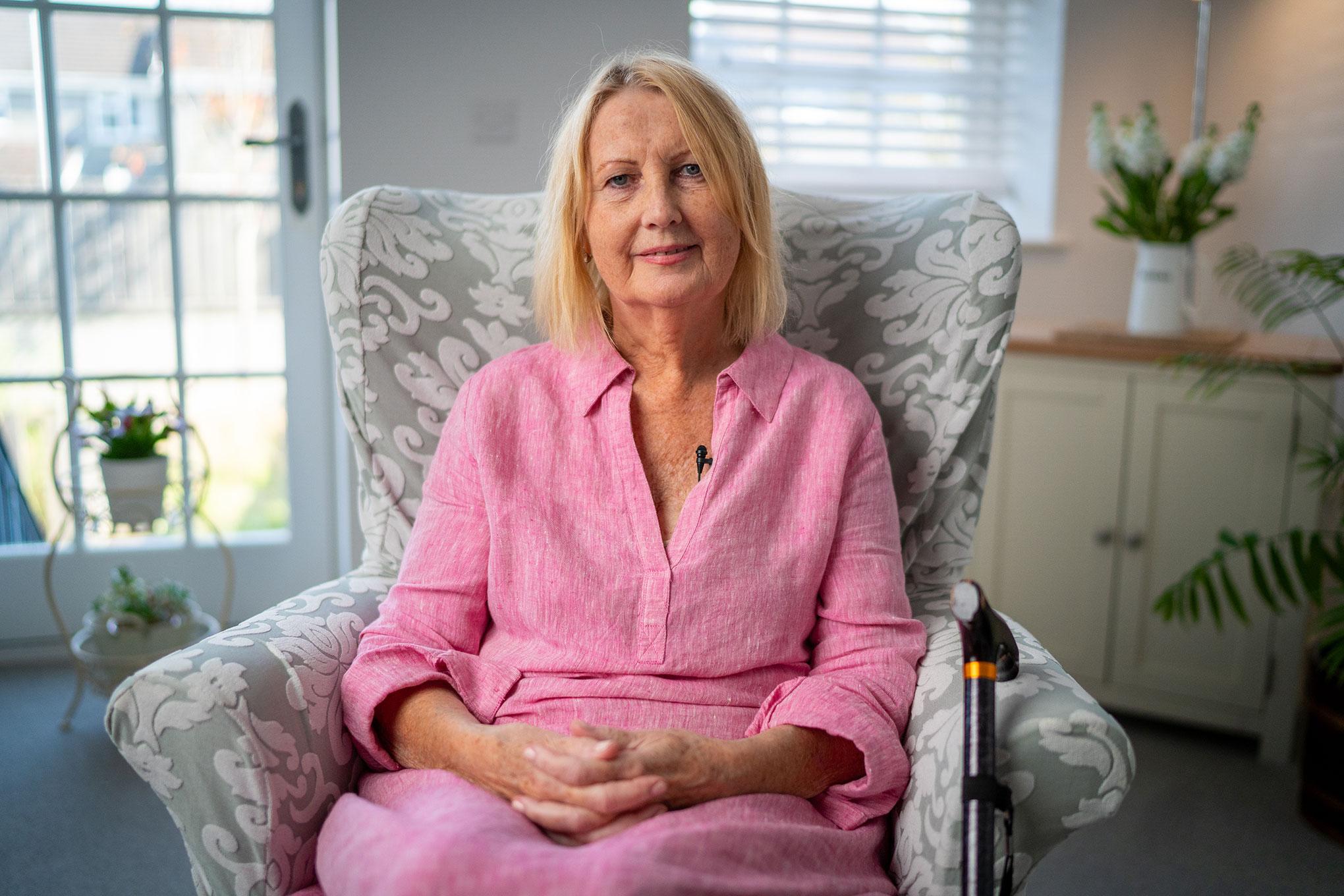
Support at Home
Support and care services to help you continue living at home safely.

If you have osteoporosis or broken bones, you may need extra support at home. Physical changes, pain, or a higher chance of breaking a bone can make daily activities harder. For example, you might find it more difficult to wash, dress, cook, or do housework.
On this page, we explain what support may be available to help you live safely at home with osteoporosis or broken bones.
What kind of support might I need?
Short-term help after a broken bone or hospital stay
If you’ve recently been in hospital after a fall or broken bone, you may be able to get free care at home. This short-term care can support you while you recover. It usually lasts up to six weeks. It can help you do everyday tasks independently again. For example, washing, dressing, and preparing meals. You might hear this called “intermediate care” or “rehabilitation, reablement and recovery services”. A healthcare professional should discuss this with you before you leave hospital.
If you had a fall or injury at home but did not stay in hospital, you can still ask your GP or local council or trust about short-term care.
You can read more about short-term and intermediate care on the NHS website.
We also have information to support you if you're recovering from:
Long-term help with everyday living
Sometimes, people find they need more help to continue living safely and independently at home. The rest of this page explains what kind of changes or long-term help at home you might be able to get and how to ask for it.
How can I get long-term support at home?
Getting a care needs assessment
If you think you may need ongoing help to manage at home, the first step is to get a care needs assessment from your local council or trust. A care needs assessment is free. Anyone who is finding it difficult to manage can ask for one. The assessment will help the council decide what services might be helpful for you.
How to ask for a care needs assessment
England and Wales
Find your local council and ask for a needs assessment.
Scotland
Find your local council and ask its social care department for an assessment.
Northern Ireland
Find your local Health and Social Care Trust and ask for an assessment.
You can also find the name of your local council on your council tax bill. You can usually apply online or over the phone. A friend, family member or healthcare professional, like a GP, can ask for a care needs assessment for you, with your permission.
What happens at a care needs assessment?
An assessment usually takes place in your home. It could take place over the phone or online instead, but only if you agree to it. The assessor will ask about:
how you’re managing daily tasks like washing, dressing, and cooking
any support you’re already getting
what kind of support you think would be helpful.
The assessor will be a trained health or social care professional. This could be a social worker, physiotherapist or occupational therapist.
You may feel worried about the assessment and what it might mean for you. But the aim of the assessment is to get the help you might need to stay independent for as long as possible. The assessor should ask about your goals and priorities. They should not focus only on what you can or cannot do.
You can read more on the NHS website about what to expect from a care needs assessment and your rights if you need someone to speak for you (an advocate).
How can I prepare for a care needs assessment?
Before the assessment, it can help to think about what activities you find difficult. You could make notes or keep a diary to help you. Give as much detail as you can. Include difficulties that may seem small, as well as bigger ones. Your social needs matter too, such as whether you're able to see your family and friends. Below are some examples, but you may experience other difficulties.
Getting around
You might be unable to get up and down stairs without help because of the risk of falling and breaking a bone.
You might find it difficult to get to the toilet in time if you’re walking more slowly after a broken bone.
You might be unable to lift heavy shopping due to pain from physical changes after a broken bone.
Preparing food and drink
You might find it difficult to turn taps on and off or lift the kettle due to a broken wrist bone.
You might find it difficult to reach shelves if you have height loss after a broken bone in your spine.
You might be unable to safely lift pots and pans or stand for a long time to cook meals after breaking a bone.
Personal care
You might be unable to bend down to dress your lower body due to a broken bone in your spine.
You might be unable to have a shower or bath without help because of the risk of falling and breaking a bone.
You might be unable to get in and out of bed without help after breaking a bone in your spine.
What happens after a care needs assessment?
Your council or trust will decide whether it can offer you help at home. This depends on the everyday tasks you’re unable to do and the impact on your wellbeing.
If they can help, they should agree a care plan with you. A care plan will explain what support you need and how the council or trust will provide it. You’ll have a financial assessment (also called a means test) to see if you can get help towards the cost of care.
If the council or trust cannot offer you any support, they should give you free advice about where else you may be able to get help.
What support could I get at home?
Equipment and small changes around the home
Sometimes, small changes and equipment can make things easier to manage at home, depending on your needs. You may decide to arrange some of these yourself without having a care needs assessment. Here are some examples:
Walking aids to help reduce the risk of falls. You can find out more about different kinds of walking aid on the NHS website.
Raised chairs and toilet seats to make it easier for you to sit down and get up.
Perching stools to reduce the amount of time you need to stand while cooking.
Moving items around in your cupboards so that things you use more often are easier to reach.
Using a non-slip mat in the bath or shower to reduce the risk of falls.
Removing trip hazards like rugs.
Using a kettle with a holder to make it easier to pour.
Carrying a personal alarm so that you can call for help if you fall.
Choosing a bed that keeps you comfortable at night. You can read our blog on choosing a comfy bed.
Watch: In this video, we talk about how equipment can make life easier at home after a broken bone.
Home adaptations
Home adaptations are changes to your home to help make everyday activities safer and easier. For example:
Grab rails to help you pull yourself out of the bath.
A wet room instead of a shower cubicle or bath so the bathroom is all on one level.
A stairlift to help you get up and down stairs.
Changes to the height of kitchen worktops to reduce the amount of bending and reaching you need to do.
Better lighting around your home to reduce your risk of falls.
Help with everyday activities
There are other kinds of help you may be able to get. For example:
Help with personal care like washing and dressing.
Help with practical tasks like housework and gardening.
Meal delivery services.
Community transport to help you get to appointments or social activities.
Some people choose to pay for these services themselves (sometimes called private care). You can ask for recommendations from someone you trust or your local Age UK branch. Your local council or trust may also have a list of approved agencies. This varies depending on the area you live in, and there may be waiting lists for some services.
You can read more in Age UK’s guide on getting help at home. You can also call their advice line on 0800 678 1602.
How do I pay for support at home?
Some people may have to pay towards the cost of their care. A financial assessment or “means test” decides whether the council or trust will pay for some, or all, of your care. An assessment officer will ask about your income, pension, benefits, and savings.
The rules for means testing may be different depending on where you live. In Scotland, personal care, such as help with washing and dressing, is free if you’re over 65 and your local council agrees that you need support.
You may be able to get some home adaptations and equipment for free, such as handrails, grab rails, or walking frames. Depending on where you live, councils and trusts have different rules about who can get free equipment. Contact your local council or trust to find out what support is available in your area.
You may also be able to hire or borrow equipment instead of buying it.
If you live in England, Wales, or Northern Ireland and need bigger changes to your home, you may be able to get a Disabled Facilities Grant from your local council. If you live in Scotland, it’s called the Scheme of Assistance.
We have more information about getting support with finances and money.
What support can I get as a carer?
If you care for someone with osteoporosis or broken bones, or you have osteoporosis yourself and care for another person, you may be able to get help.
You can get a carer’s assessment by contacting adult social services at your local council or trust. You’ll have a discussion at a time and place that is convenient for you. This is your chance to let your local council or trust know how your caring responsibilities affect you.
The support you can get may include:
local support groups
benefits advice
help with taxi fares if you do not drive
a short break from caring (also known as respite).
You may be a carer if you regularly support or look after a family member or friend. This could mean helping with tasks like washing, dressing, shopping, cleaning or laundry. It could also mean taking someone to appointments or staying with them because they need support. People do not always see themselves as a carer when they support a family member or friend. But having an assessment can help you get the support you need.
You can also register as a carer with your GP surgery. They can give you advice about local support and prioritise you for some vaccinations.
You can get more information from the Carers UK website or call them on 0808 808 7777. You can also find more information on our webpage about caring for someone with broken bones.
What if living at home is no longer possible?
Many people with osteoporosis and broken bones can continue living independently at home. But some people may find that even with help, this is not possible. Deciding whether to move is personal. Your decision might depend on your living situation, the difficulties you have, and the support you need.
Some people may have the option to move in with family or friends. Others choose a smaller home or one that is easier to get around, such as a bungalow or a flat with a lift.
If you or the person you care for can no longer live safely at home, speak to your local council or trust. You can find out more about the options on the NHS website. Options could include sheltered housing, assisted living, and care homes.
What can I do if I’m worried about my safety or someone else’s?
If you or someone else needs help with daily living activities, it’s important that you feel safe, supported and cared for.
If you’re worried about the care that you or someone else is getting, you can raise concerns with the people providing care. Only do this if it's safe. You can also contact your local council or trust.
England and Wales
Scotland
Northern Ireland
Find your local Health and Social Care Trust
Age UK has more information about protecting people from harm or neglect, and where to go for help. You might hear this called "safeguarding". If someone is in immediate danger, contact the police on 999.
About this information

Get news and updates via your inbox
Don't miss our expert insights, recipes, and tips for living well with osteoporosis.
Connect with people living with osteoporosis
Our online community is a welcoming and safe space for you to share your experiences and find peer support.