Exercise to help your balance
Balance exercises that can reduce your chance of falls and broken bones.

Balance exercises can improve your balance, help you feel steady and make your muscles stronger. This can help reduce the chance of having a slip, trip or fall. Slips, trips and falls can lead to broken bones (fractures).
It is important to listen to your body and feel safe, confident and comfortable when you exercise. You should feel steady before you start impact and strength exercises for your bones. Before you start any type of exercise, read our information about exercising safely with osteoporosis and broken bones (fractures).
On this page, we answer some common questions about movements to help your balance. We also show you some different exercises to help keep you steady. Do not worry if you have not done much exercise in a while, these balance exercises are gentle and easy to follow.
Most people with osteoporosis can exercise safely. Choose the exercise and level of intensity that is right for you.
Talk to your doctor or physiotherapist before starting any exercise if you:
have a history of many broken bones or spinal fractures
are recovering from a broken bone
have any questions or concerns about your own personal situation.
They can tell you about what exercises and activities are safe and suitable for you.
Why are balance exercises helpful if you have osteoporosis?
Balance exercises are helpful for everyone. It is never too early or too late to start doing balance exercises. This is because balance exercises help to improve your balance and coordination, helping to keep you steady. And you can keep doing the things that are important to you.
Balance exercises are especially helpful if you:
have osteoporosis
are 65 or over and are worried about falling
have had a recent slip, trip or fall.
Should I talk to my doctor if I have had a recent slip, trip or fall?
Talk to your doctor if in the last year, you have had:
two or more falls
broken a bone because of a fall.
Your doctor can refer you to your local falls service. Your local falls service can book you in for a falls assessment and refer you to a specialist exercise programme. As part of the programme, a healthcare professional will work with you to improve your balance over a few months. For more information, visit the NHS website.
How much and how often should I move to improve my balance?
We recommend you do balance exercises on at least two days of the week if you have osteoporosis and are:
unsteady
65 or over
not doing regular exercise.
If you can, build up to doing balance exercises every day.
What exercises can I do to improve my balance?
There are different exercises you can do to help keep you steady. They include:
sitting to standing
heel raises (lifting your heels up and down)
toe raises (lifting your toes up and down)
heel walking (walking on your heels)
toe walking (walking on your toes)
heel-toe stand (standing up with the heel of one foot directly in front of the toes of the other foot)
heel-toe walk (walking in a straight line by putting the heel of one foot directly in front of the toes of the other foot)
standing on one leg
three-way lunge (lunging forward, to the side and back).
We show you how to do these different exercises in our 'Exercises to improve balance' video below.
If these exercises are not suitable for you, take a look at these gentle sitting exercises you can do at home.
Watch: Exercises to improve balance
In this video, Physiotherapist Kerrie, shows you how to do different balance exercises. This video is suitable for everyone, including if you have osteoporosis and if you have had spinal fractures or many broken bones.
The video is 17 minutes and 16 seconds long and includes:
6 warm up exercises
6 balance exercises
3 cool down stretches.
If you feel unsteady, stand near a stable surface, such as a table or chair, while doing these exercises. Keep one hand on the surface to support you. You do not need to hold on tightly.
The movements you do are called repetitions. Every time you complete a balance exercise from start to finish is one repetition. For example, a repetition is every time you lift your heels or toes up and down.
When your balance has improved, you can progress these exercises. For example, you could try not holding on to a stable surface. Stay near the surface if you need to. You could also gradually increase the number of repetitions you do of each exercise over time. Building up gradually will help to improve your balance and keep you steady. It is important to listen to your body and only progress when you feel ready to.
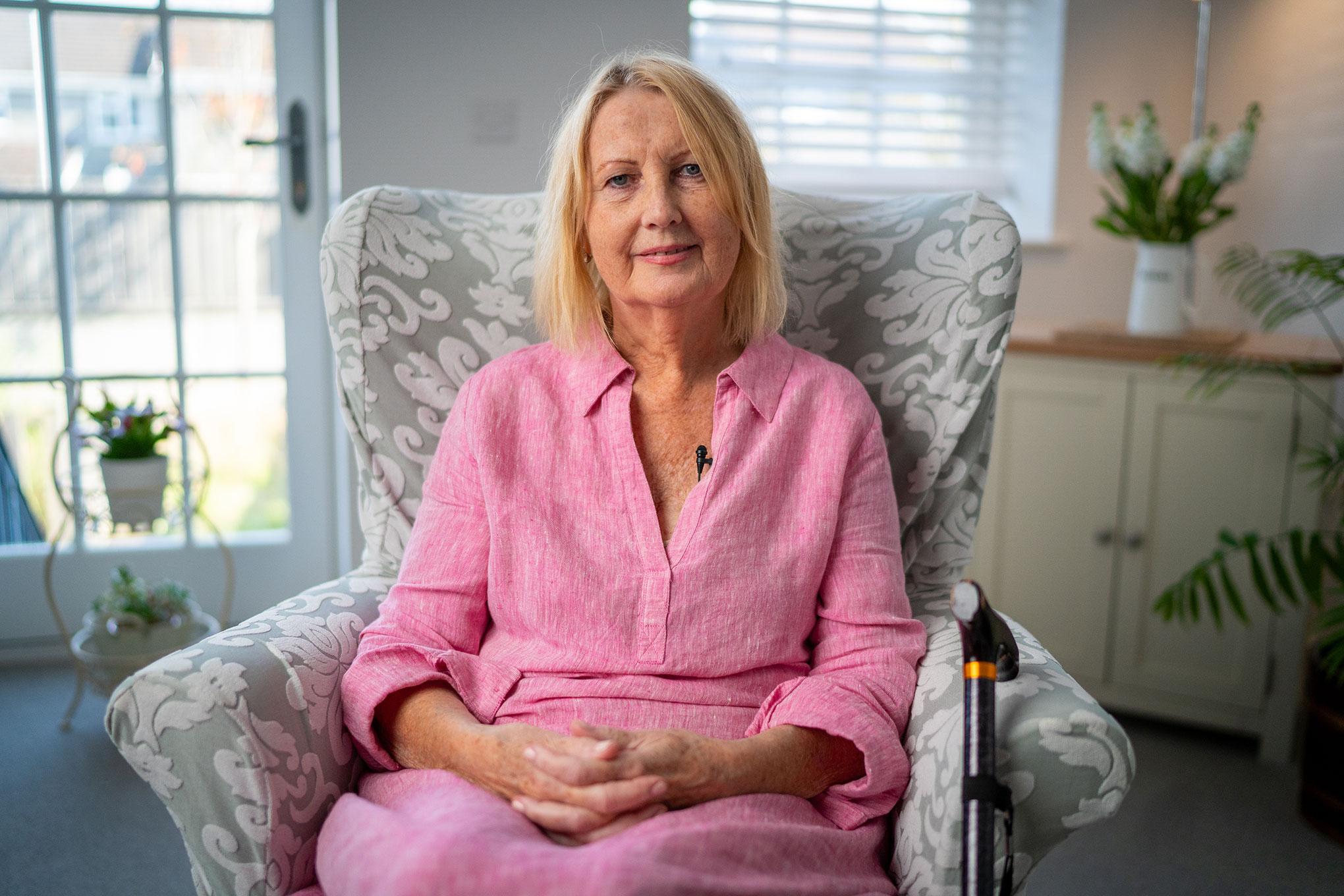
Balance training is really important to me. I started in a very unsteady way, relying on sturdy support to ensure I did not tumble. I was amazed at the speed of noticeable progress once it was embedded into my everyday life.
How can I make balance exercises a part of my routine?
Now that you have tried the exercises in the video, it is important to continue to make balance exercises a part of your weekly routine. Doing these exercises on at least two days of the week can make a difference as they can help you to feel steady and improve your mobility.
Find a combination of exercises and activities that work for you. For example, you could do a combination of your favourite exercises from our video. You could also try activities such as dance, yoga, Tai Chi or Pilates. When doing these activities, it is best to stand up if you can.
You can also stay active by doing regular everyday activities. Be aware of the amount of time you spend sitting down. Make sure to break up long periods of time you are sitting by standing up for a few minutes every hour.
Do I need to do another type of exercise to help my bones?
The best way to help your bones is to do both impact and strength exercises. Impact and strength exercises can help make your bones stronger. But it is important to have good balance before starting these types of exercise for your bones.
Learn how exercise can help make your bones stronger.
About this information

Find a support group
Connect with people, in person or online, at one of our many support group sessions around the country.

Get news and updates via your inbox
Don't miss our expert insights, recipes, and tips for living well with osteoporosis.